
Calorimetry – an informative tool of digital era concrete technology. Current state and prospects
1
O.M. Beketov National University of Urban Economy, Kharkiv, Ukraine
2
Simon Kuznets Kharkiv National University of Economics, Kharkiv, Ukraine
3
Kyiv National University of Construction and Architecture, Kyiv, Ukraine
4
Kaunas University of Technology, Kaunas, Lithuania
Submission date: 2025-02-26
Final revision date: 2025-04-23
Acceptance date: 2025-09-13
Publication date: 2026-01-20
Corresponding author
Cement Wapno Beton 30(3) 218-231 (2025)

KEYWORDS
TOPICS
ABSTRACT
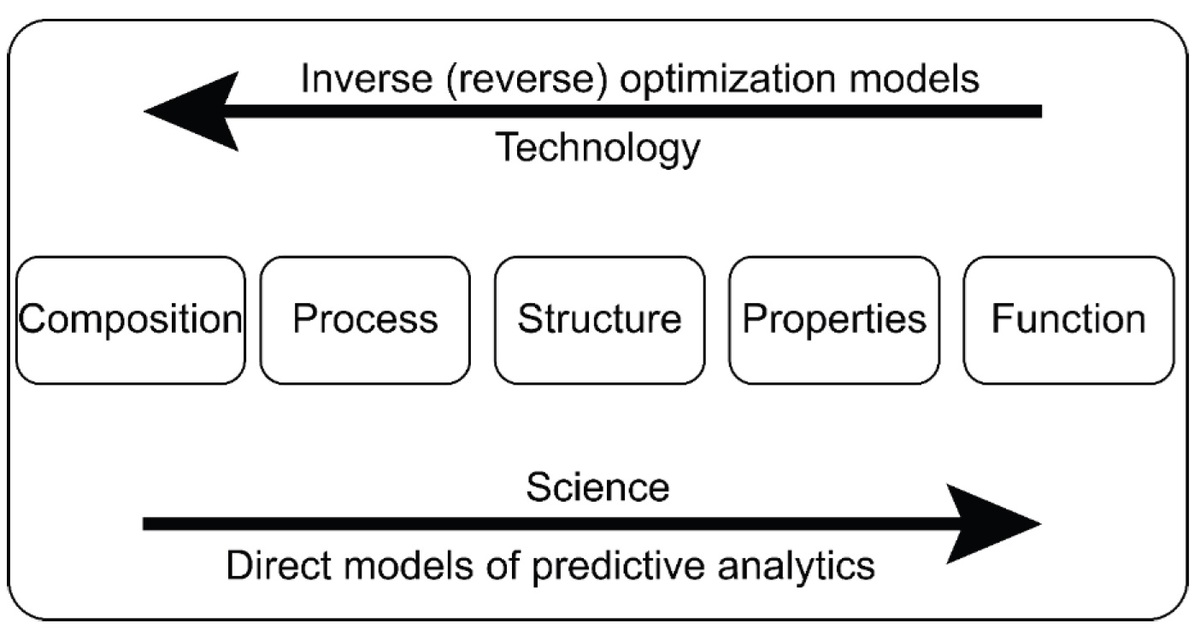
An analysis of current trends in concrete technology has been conducted. The feasibility of integrating digital methods into the “composition-structure-process-properties-functions” system has been established on the basis of fundamental concrete science principles. The discussion focusses on the role of functional-kinetic monitoring of heat evolution data, which serves as a carrier of technological information about the reactivity, directionality, intensity, and completeness of the progression of various thermodynamically substantiated spontaneous hardening reactions. The efficacy of using calorimetric data to evaluate the interaction parameters of functionally integrated components during the design of concrete compositions and the operational control of hardening regimes has been confirmed. In addition, the effectiveness of the suggested functional-kinetic approach in addressing technological challenges through adaptive [self-adjusting] algorithms for calorimetric monitoring is explored. Methods for digitising calorimetric information, which involves converting analogue thermokinetic and/or temperature dependencies into a digital format in real time, are also proposed.
REFERENCES (36)
1.
Zongjin Li et al. Advanced Concrete Technology. John Wiley & Sons, Inc., 2023. ISBN 9781119806257. https://doi.org/10.1002/978111....
2.
Science and Technology of Concrete Admixtures. Elsevier Ltd., 2016. ISBN 9780081006931. https://doi.org/10.1016/C2015-....
3.
Shetty M. Concrete Technology Theory and Practice. S. Chand Publishing, 2006. ISBN 9788121900034.
4.
Aïtcin P.-C. High Performance Concrete - An overview. Mat. Struct. 31, 111-117 (1998). https://doi.org/10.1007/BF0248....
5.
EN 206:2013+A1:2016. Concrete - Specification, performance, production and conformity.
6.
Usherov-Marshak А. Science of Concrete: Modern Etudes. Kharkov: Rarities Ukraine, 2016, 135 p. ISBN 978-966-2408-60-7.
7.
Usherov-Marshak A., Gotz V., Kabus A. Concrete and mortars. Teaching aid. Kyiv, Osnova, 2022. 92 p. UOK 666.972.
8.
Kurdowski W. Cement and Concrete Chemistry. Springer Science & Business, 2014. https://doi.org/10.1007/978-94....
9.
Scrivener K., John V., Gartner E. Eco-efficient cements: Potential economically viable solutions for a low-CO2 cement-based materials industry. Cement and Concrete Research, 2018, v.114: 2-26. https://doi.org/10.1016/j.cemc....
10.
Kimmig J., Zechel S., Schubert U. Digital Transformation in Materials Science: A Paradigm Change in Material's Development. Adv. Mater. 33 (2021), 2004940. https://doi.org/10.1002/adma.2....
11.
Gamil Y. and Cwirzen A. Digital Transformation of Concrete Technology (2022) - A Review. Front. Built Environ. 8:835236. https://doi.org/10.3389/fbuil.....
12.
Wangler T., Roussel N., Bos F., Salet T. and Flatt R. (2019) Digital concrete: a review. Cement and Concrete Research, 123, 105780. https://doi.org/10.1016/j.cemc....
13.
Van Damme, H. (2020). Challenges and opportunities for concrete in the digital era. In Gulf Conference on Sustainable Built Environment (pp. 27-56). Springer International Publishing. https://doi.org/10.1007/978-3-....
14.
Usherov-Marshak A., Ciak M. Principles of modern concrete science. Dni betonu. Krakow, 2018, p. 185-196. https://www.dnibetonu.com/wp-c....
15.
Akhmetova S., Abilkasova S. Physical and Colloid Chemistry. Laboratory manual. Almaty ATU, 2019, 138 p. ISBN 9786012635003.
16.
Wilkinson M. et al. The FAIR GuidingPrinciples for scientific datamanagement and stewardship. Sci Data 3, 160018 (2016). https://doi.org/10.1038/sdata.....
17.
Sarge S., Höhne G., Hemminger W. Calorimetry. Fundamentals, Instrumentation and Applications. Wiley‐VCH Verlag, 2014, 300 p. https://doi.org/10.1002/978352....
18.
Usherov-Marshak A. Calorimetry of cement and concrete. Kharkov, Fact, 2002, 180 p. ISBN 966-637-066-2.
19.
Principles of Thermal Analysis and Calorimetry. The Royal Society of Chemistry, 2016, p. 259. ISBN 9781782620518. https://doi.org/10.1039/978178....
20.
Handbook of Thermal Analysis and Calorimetry: Principles and Practice (Volume 1). Edited by Michael E. Brown. Elsevier Science, 1998, 722 p. ISBN 9780444820853.
21.
SP-241: Concrete Heat Development: Monitoring, Prediction & Management. ACI, 2007. 140p. ISBN 9780870312403.
22.
Wadsö L. Isothermal calorimetry for the study of cement hydration. Lund, 2001. 34 p. https://api.semanticscholar.or....
23.
Sandberg J. and Liberman S. Monitoring and Evaluation of Cement Hydration by Semi-Adiabatic Field Calorimetry. SP-241: Concrete Heat Development: Monitoring, Prediction & Management, ACI, 2007, p. 13-24. https://doi.org/10.14359/18648.
24.
Usherov-Marshak A., Vaičiukynienė D., Krivenko P. and Bumanis G. Calorimetric Studies of Alkali-Activated Blast-Furnace Slag Cements at Early Hydration Processes in the Temperature Range of 20-80 °C. Materials 2021, 14(19), 5872. https://doi.org/10.3390/ma1419....
25.
Rosnita Mohamed, Rafiza Abd Razak et al. Heat evolution of alkali-activated materials: A review on influence factors. Construction and Building Materials, vol. 314, Part B, 2022, 125651. https://doi.org/10.1016/j.conb....
26.
Sanytsky M., Usherov-Marshak A., Kropyvnytska T., Heviuk I. Performance of multicomponent Portland cements containing granulated blast furnace slag, zeolite, and limestone. Cement Wapno Beton 25(5) 416-427 (2020). https://doi.org/10.32047/CWB.2....
27.
A Practical Guide to Microstructural Analysis of Cementitious Materials. Edited by Scrivener, K., Snellings, R., & Lothenbach, B. CRC Press, 560 p., 2016. https://doi.org/10.1201/b19074 , ISBN 9781138747234.
28.
Usherov-Marshak A., Kabus A. Calorimetric monitoring of early hardening of cement in the presence of admixtures. Inorg Mater 49, 2013, p. 430-433. https://doi.org/10.1134/S00201....
29.
Zeng H. et al. Performance evolution of low heat cement under thermal cycling fatigue: A comparative study with moderate heat cement and ordinary Portland cement. Construction and Building Materials, vol. 412, 2024, 134863. https://doi.org/10.1016/j.conb....
30.
Bentz D., Jones S., Bentz I., Peltz M. Towards the formulation of robust and sustainable cementitious binders for 3-D additive construction by extrusion. Construction and Building Materials, 2018, v. 175, p. 215-224. https://doi.org/10.1016/j.conb....
31.
Wangler T., Pileggi R., Gürel S., Flatt R. A chemical process engineering look at digital concrete processes: critical step design, inline mixing, and scaleup. Cement and Concrete Research, 2022, v.155, 106782. https://doi.org/10.1016/j.cemc....
32.
ASTM C1897-20. Standard Test Methods for Measuring the Reactivity of Supplementary Cementitious Materials by Isothermal Calorimetry and Bound Water Measurements. https://www.doi.org/10.1520/C1....
33.
ASTM C1074-19. Standard Practice for Estimating Concrete Strength by the Maturity Method. https://www.doi.org/10.1520/C1....
34.
Usherov-Marshak A., Kabus A. Functional kinetic analysis of the effect of admixtures on cement hardening. Inorg Mater 52, 2016, p. 435-439. https://doi.org/10.1134/S00201....
36.
Yashin V. Adaptive algorithms in information-measuring systems. Modern knowledge-intensive technologies, 8 (2023), p. 96-102. https://doi.org/10.17513/snt.3....
Share
RELATED ARTICLE
| ISSN: | 1425-8129 |


Całkowita kwota działania: 101 900 PLN
Kwota dofinansowania z MNiE: 85 100 PLN
Celem działania jest podniesienie poziomu technicznego obsługi Autorów i usprawnienie przepływu artykułów w procesie redakcyjnym.
Działania mające realizować powyższy cel polegać będą na:
- wprowadzeniu systemu elektronicznego zarządzania zgłaszaniem, recenzowaniem i przetwarzaniem artykułów,
- zmiana dotychczasowej organizacji strony internetowej,
- integracja numerów DOI (przydzielanych obecnie publikowanym artykułom) z bazą CrossRef.
© 2006-2026 Journal hosting platform by Bentus
We process personal data collected when visiting the website. The function of obtaining information about users and their behavior is carried out by voluntarily entered information in forms and saving cookies in end devices. Data, including cookies, are used to provide services, improve the user experience and to analyze the traffic in accordance with the Privacy policy. Data are also collected and processed by Google Analytics tool (more).
You can change cookies settings in your browser. Restricted use of cookies in the browser configuration may affect some functionalities of the website.
You can change cookies settings in your browser. Restricted use of cookies in the browser configuration may affect some functionalities of the website.